Tag: what nerves are controlled by the cervical spine

  • Dermatome Map Cervical Spine
    Dermatome Map Cervical Spine

    Dermatome Map Cervical Spine – If you’ve ever wondered what the human dermatome’s map will look, you’re in the right spot. Before we move on to this map, lets look at what is a dermatome. What are the different types? Most importantly, why is it important to be aware of dermatomes order to understand your body. Continue reading to learn more. You might be amazed! Here are some examples of dermatomes.

    Rheumatology Images Cervical Dermatome Anatomy 04 CERVICAL Flickr

    Rheumatology Images Cervical Dermatome Anatomy 04 CERVICAL Flickr

    What is a Dermatome?

    ” Dermatomes” refers to the spinal cord “dermatome” refers to a tissue that covers the cord of the spinal. Dermatomes play a crucial role in allowing doctors to create images of spinal cord that are useful for diagnosis. Two major maps are recognized by medical specialists. They are the Keegan and Garret map and the Foerster map. These maps were made in the 1930s and are often used. The trigeminal nerve and the maxillary nerve are the largest dermatomes.

    Dermatomes are skin regions which are connected to a particular nerve bundle. In cases of spinal injuries, pain may be experienced in a dermatome that is innervated by that nerve. Similar to the pain that is caused by an outbreak of shingles can be felt on specific spinal nerves. If you experience a discomfort or neurological issue involving the dermatome region, you need to visit a doctor.

    ALSO READ:[show-list showpost=5 category=”dermatome-map” sort=sort]

    What are Some Examples of Dermatomes?

    Dermatomes are the segments of skin that is provided by a single spinal nerve. These nerves relay motor, sensory and autonomic information. They form an element of the peripheral nerve system, which connects the brain and other parts of the body. Dermatomes can get affected because of a spinal lesion. If one of these dermatomes gets injured, it is able to be easily treated with local anesthetic.

    Dermatomes in the thoracic region have been labeled with letter-number combinations that show how the region is connected in question and the sensory nerve that supplies the area. For example the C1 spinal nerve doesn’t have a dermatome. However, all spinal nerves in the region are labeled C1 – C8 and T9 is a reference to belly button. Dermatomes are layered vertically on the trunk while dermatomes on the extremities are typically in a longitudinal.

    Dermatome Map

    The dermatome map is one of the common features of textbooks that cover anatomy. However, the dermatome map is not consistent both within and inter-textbook. Its naming is inconsistent as are some textbooks that have different maps on various pages. This can be particularly challenging when the authors of different chapters disagree on the choice of dermatome map. Most textbooks use maps of Foerster, Keegan, and Garrett however, they do not provide appropriate references. In addition, four textbooks utilize maps with no citations, and one of them is one that refers to only secondary sources.

    Dermatomes are the parts of the skin that receives sensory information from the dorsal root of a spinal nerve. The dermatomes are not uniformly found, but they tend to dip lower than horizontally. This is a natural variation and some tissue types are covered with more than one. Furthermore dorsal spinal nerve roots may be anastomosed with intrathecal intersegmental sensory neurons in those limbs that are dorsal.

    Dermatome Map Cervical Spine – Dermatome Map

    Cervical Dermatome Map Physical Therapy Massage Therapy Hand Therapy

    Cervical Dermatome Map Physical Therapy Massage Therapy Hand Therapy

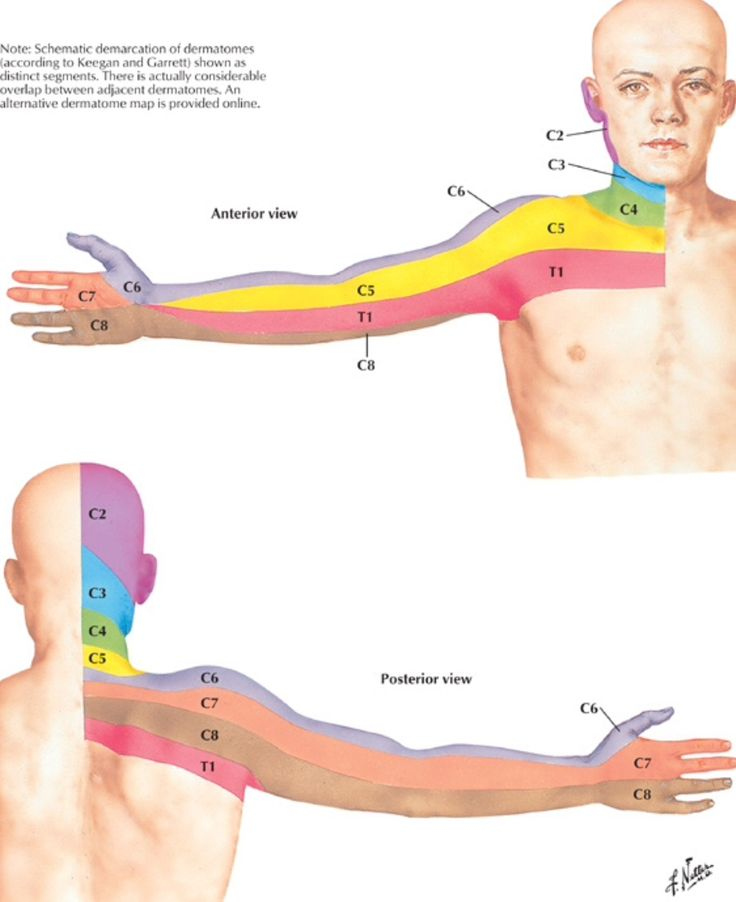
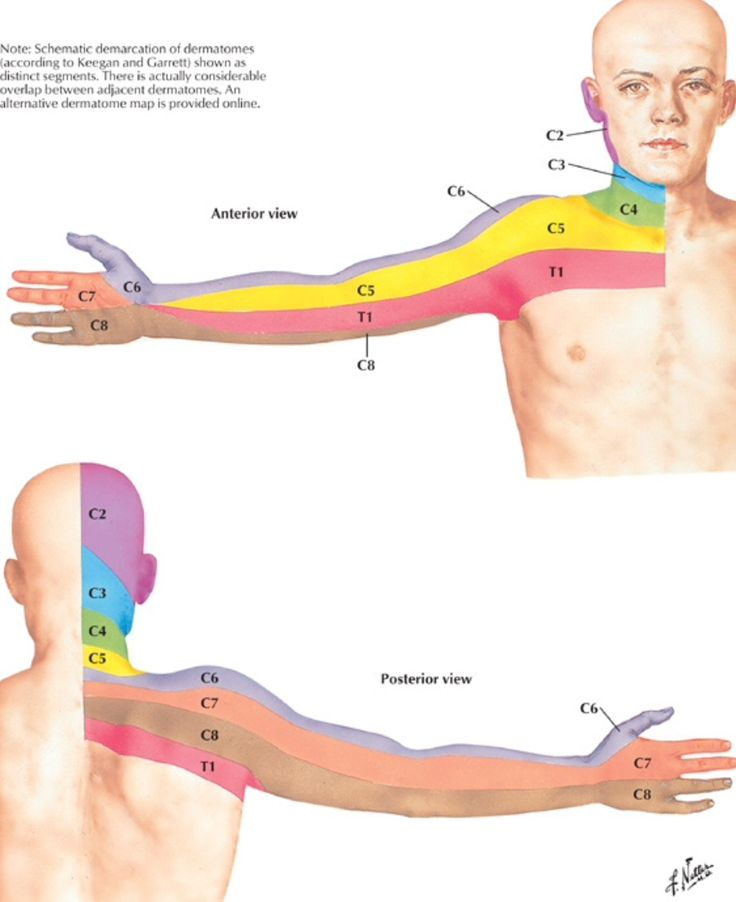
    Dermatome Distribution For The Cervical Spine Netter Muscle Anatomy

    Dermatome Distribution For The Cervical Spine Netter Muscle Anatomy

    Herniated Disc In The Neck And Lower Back Symptoms Treatment

    Herniated Disc In The Neck And Lower Back Symptoms Treatment

  • Cervical Spine Dermatome Map

    Cervical Spine Dermatome Map

    Cervical Spine Dermatome Map – If you’ve ever wondered how the human dermatome chart is, you’ve come to the right spot. Before we go to an image, it’s important to talk about what a dermatome is. What are the different kinds? The most important thing is what is the reason to be aware of dermatomes order to understand your body. Read on to find out more. You might be surprised! Here are some examples of dermatomes.

    Dermatomes Definition Chart And Diagram

    Dermatomes Definition Chart And Diagram

    What is a Dermatome?

    “dermatome,” or “dermatome” refers to a tissue that covers the cord of the spinal. Dermatomes are important in allowing doctors to create models of the cord that aid in the diagnosis. Two major maps are regarded as valid by medical experts. These are: the Keegan and Garret map and the Foerster map. The maps were designed in the 1930s and remain frequently used. The trigeminal nerve and the maxillary nerve are the biggest dermatomes.

    Dermatomes are skin regions that are linked to a specific nerve bundle. In the case of spinal cord injury, pain may be experienced in a dermatome that is innervated by that nerve. The same is true for the pain caused by an outbreak of shingles can be felt in specific spinal nerves. If you suffer from pain or neurological condition involving the dermatome region, you need to visit a doctor.

    ALSO READ:[show-list showpost=5 category=”dermatome-map” sort=sort]

    What are Some Examples of Dermatomes?

    A dermatome is a segment of skin supplied by the spinal nerve. These nerves carry sensory, motor and autonomic information. They form an element of the peripheral nerve system which connects the brain with the all the body. A dermatome may become affected due to a spinal cord injury. When one of these dermatomes becomes injured, it could be easily treated using the use of a local anesthetic.

    Dermatomes in the thoracic region have been labeled by letter-number combinations, which show how the region is connected along with the sensor nerve that is responsible for the area. For example C1 spinal nerve doesn’t possess a dermatome, however those spinal nerves that are labeled C1-C8 and T9 refers to belly button. Dermatomes are laid horizontally on the trunk and dermatomes located on the extremities tend to be longitudinal.

    Dermatome Map

    The dermatome map is the most common element in textbooks that teach anatomy. The dermatome map is inconsistent both intra and inter-textbook. Its name isn’t consistent and certain textbooks have different maps on various pages. This is particularly problematic when the authors of multiple chapters are not unified in their choice of dermatome map. Most textbooks use Maps of Foerster, Keegan, and Garrett however they don’t provide proper references. Additionally, four textbooks employ maps with no citations. This includes one that cites only secondary sources.

    Dermatomes are the regions of skin that receives sensory stimulation from the dorsal roots of one spinal nerve. The dermatomes are not uniformly located, but they tend to dip less inferiorly than horizontally. This is an inherent variation and certain tissues are covered by more than one dermatome. Also dorsal spinal nerve roots may contain intrathecal intersegmental connections with sensory neurons that originate from Dorsal limbs.

    Cervical Spine Dermatome Map – Dermatome Map

    Pin On DERMATOMES

    Pin On DERMATOMES

    Dermatome Distribution For The Cervical Spine Netter Muscle Anatomy

    Dermatome Distribution For The Cervical Spine Netter Muscle Anatomy

    Rheumatology Images Cervical Dermatome Anatomy 04 CERVICAL Flickr

    Rheumatology Images Cervical Dermatome Anatomy 04 CERVICAL Flickr